The northern Chinese city of Ulanqab is accelerating its expansion into a major artificial intelligence computing hub by powering data infrastructure with regional wind and solar reserves. The municipal sector generated 5.68 billion yuan—around 849 million dollars—across the first eight months of the year following a series of strategic technology investments.
Located in the Inner Mongolia Autonomous Region, Ulanqab historically served as an agricultural center before pivoting toward high-performance computing to capitalize on abundant renewable power. Following the launch of China’s national “East Data, West Computing” initiative in 2022, municipal authorities announced a three-year plan in late 2025 to establish a clean-energy computing hub. Official statistics show that 109 computing center projects had been contracted as of August 2026, lifting sector revenue by 40.3 percent year-on-year from January to August.
Presidential Inspection and Infrastructure Demands
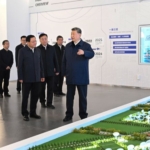
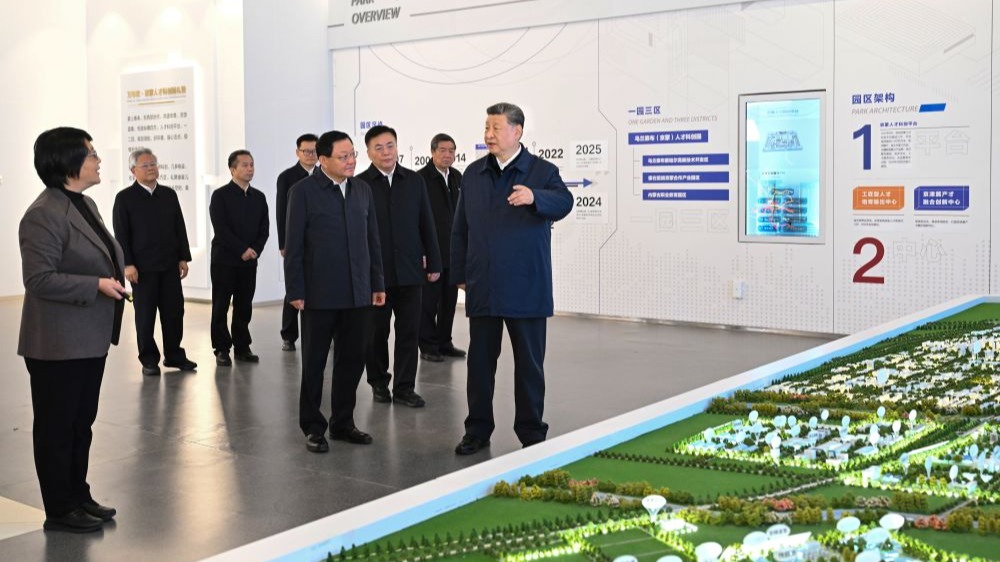
Chinese President Xi Jinping visited the Chahar High-Tech Industrial Development Zone on Friday to review construction progress at an Inner Mongolia computing node. During the inspection, Xi called for balanced coordination between industrial growth and environmental protection while expanding regional clean power capacity.
President Xi stated that authorities must ensure the efficient operation of completed projects, finish pipeline construction on schedule, and rigorously implement efficient, green, and secure development standards across the computing power industry.
Computing centers—specialized facilities housing thousands of networked servers that process complex algorithms—require dependable electricity grids, high-speed networking, and continuous cooling systems. Ulanqab records an average annual temperature of 4.3 degrees Celsius, enabling facilities to utilize free ambient air cooling for approximately 10 months each year. Combined with low operating costs and expansive wind and solar assets, the area has drawn investments from major digital enterprises.
John Gong, an economics professor at the University of International Business and Economics, told CGTN that Ulanqab is effectively utilizing its renewable energy assets to support domestic artificial intelligence development, underscoring official endorsement for driving digital innovation through local geographical advantages.
Ecological Management Alongside Tech Expansion
The municipal technology drive coincided with environmental inspections in the area. Xi also visited the Huangqihai Lake nature reserve on Friday to inspect local wetlands, shorelines, and regional bird populations. The closed-basin water body previously faced severe drying before receiving county-level reserve status in 1993 and autonomous-region designation in 2003.
President Xi emphasized that regional authorities must strictly enforce wetland protection laws, maintain ecological red lines, and prioritize natural recovery supported by targeted human intervention to protect local biodiversity.