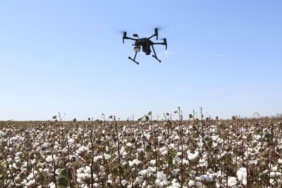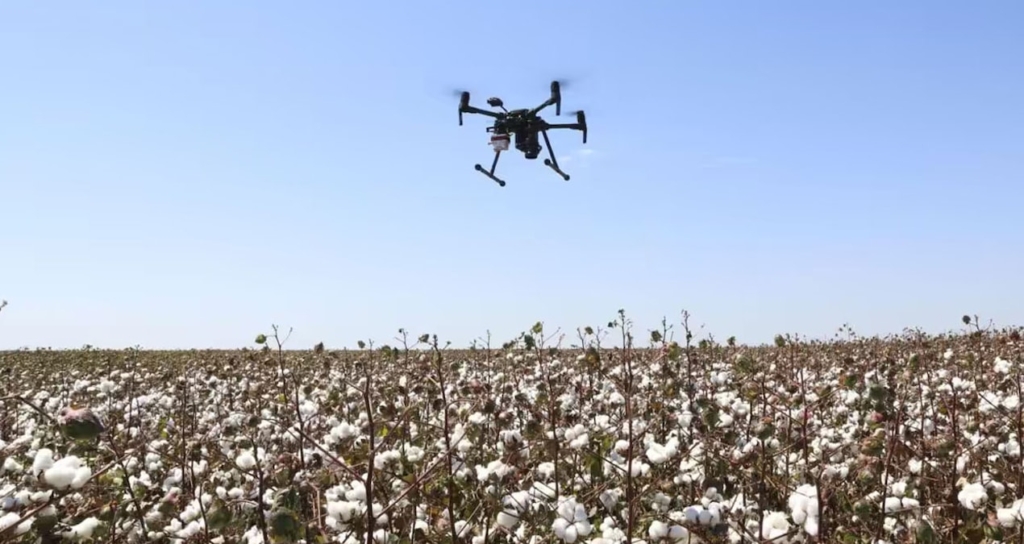
Agricultural research corporation Embrapa has unveiled a drone-based dispersal system in Brazil that releases thousands of beneficial insects over cotton fields, targeting crop pests while covering a one-hectare area in roughly eight minutes to cut chemical pesticide usage and save operational time.
The unmanned aerial system was showcased in the state of Ceara during the ExpoCariri 2026 event. The device carries parasitoids—insects whose larvae feed on and ultimately eliminate pest species—packaged inside small tubes, scattering them across designated cultivation zones to eliminate the labor-intensive need for manual distribution over large farmlands.
According to figures released by Embrapa, treating one hectare requires around 730 beneficial insects. The payload is divided across roughly 25 containers per hectare, with each individual tube holding 30 insects.
Designed primarily to curb infestations of the cotton boll weevil, the biological pest-control deployment utilizes the Jaliscoa grandis species. The aerial delivery platform can also disperse Trichogramma wasps to combat caterpillar threats.
Alongside aerial distribution, researchers are focusing on cutting mass-rearing costs. Experimental trials showed that utilizing cheaper, reusable materials enabled a two-person team to produce approximately 2,500 parasitoids on a weekly basis.
Embrapa explained that the drone platform is not intended to entirely replace chemical applications, but rather to function in tandem with biological controls and field monitoring. The institute is also studying insect-killing fungi, which have eliminated more than 80 percent of targeted pests in laboratory trials, with the biological techniques slated for deployment within three to six years.